If your spa cover feels heavy, sags in the middle, or lets steam escape, hot tub cover replacement may belong on your winter preparation list. A cover should fit securely, help retain heat, and be manageable enough to close properly after every soak.
In Des Moines and Pella, cold wind and snow make small weaknesses harder to ignore. Checking the cover before winter gives you time to confirm measurements, compare construction, and address damaged fasteners before they become a bigger inconvenience.
Six Signs You Need Hot Tub Cover Replacement
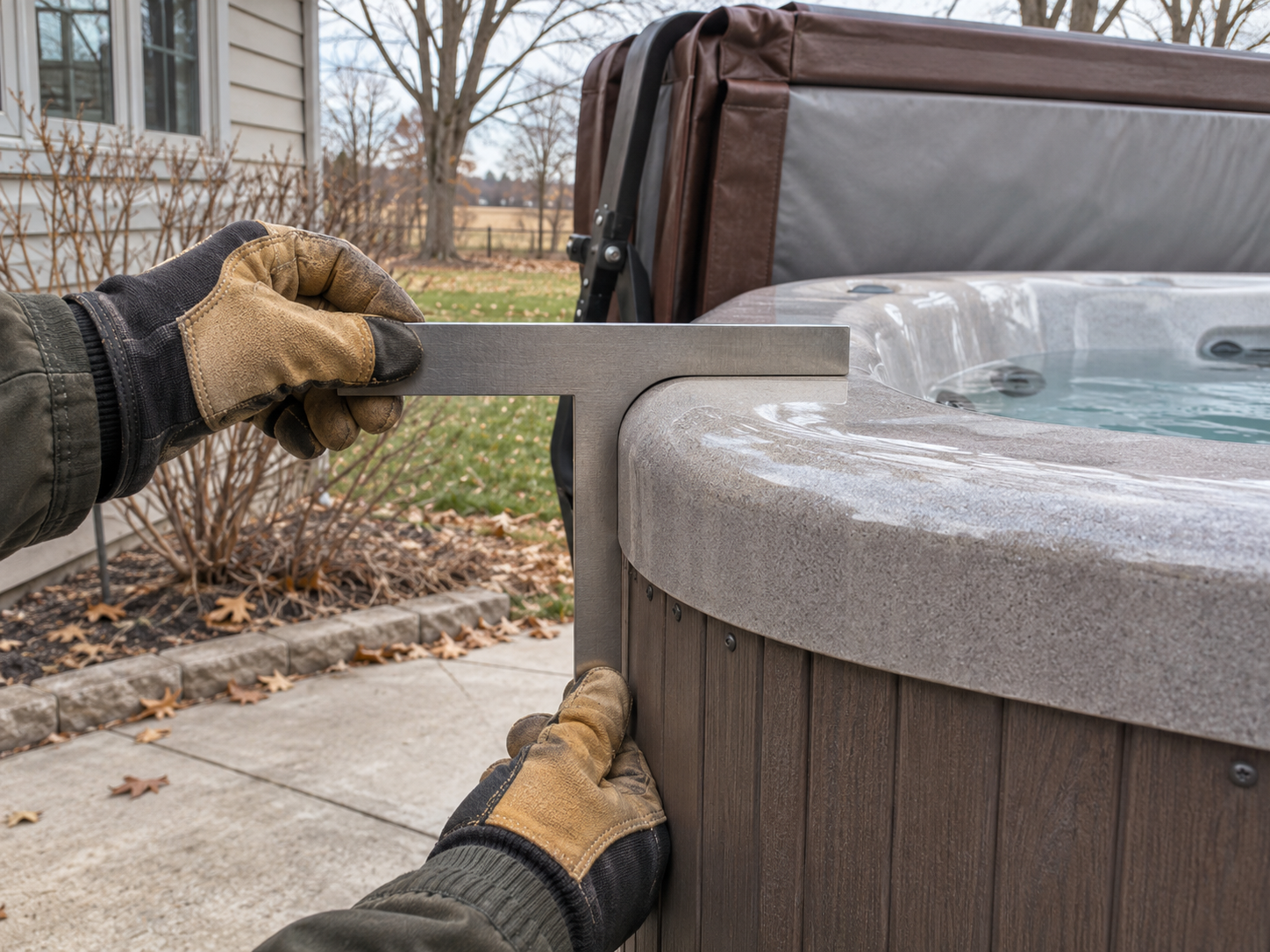
A cover’s appearance tells only part of the story. When considering hot tub cover replacement, look at how it lifts, sits on the rim, and fastens to the cabinet.
- Heavy or waterlogged: A noticeable increase in weight can indicate moisture inside the foam. Do not force a struggling lifter or attempt an awkward lift alone.
- Sagging in the middle: A bowed center can collect water and prevent an even fit. Snow adds weight to an already weakened cover.
- Torn or cracked vinyl: Splits, brittle edges, and damaged seams deserve inspection. Exterior damage can expose the layers underneath to further deterioration.
- Broken straps or locks: A cover that cannot be secured needs prompt attention. A sound foam core does not compensate for failed fastening hardware.
- Steam escaping while closed: Persistent vapor at the perimeter or fold suggests a gap worth checking. First confirm that the cover is seated correctly.
- A persistent mildew smell: A musty odor, particularly with added weight, can suggest trapped moisture. Surface odor alone does not prove the foam needs replacing. Hot Spring Spas
Not every loose buckle requires complete hot tub cover replacement. Have the condition of the straps, attachment points, foam, and outer material assessed together before deciding whether a compatible part will solve the problem.
Why a Worn Cover Matters in an Iowa Winter
Hot tub cover replacement is about more than improving how your backyard looks. Gaps around the edges and center fold allow warmth and moisture to escape, making it harder to maintain the water temperature.
A waterlogged cover also loses insulating effectiveness as its condition deteriorates. Your heater may need to operate more to replace lost heat, although actual costs depend on weather, electricity rates, spa settings, and use.
Review our guide to what it costs to run a hot tub in winter before assuming that every increase in your bill comes from the cover. Hot tub cover replacement can address a poor seal, but it cannot correct every source of energy use.
Safety also matters in hot tub cover replacement. Broken locks, torn straps, or a cover that no longer closes properly can weaken the barrier over the water, while extra weight makes safe handling more difficult.
Never let children or pets climb onto a spa cover, and do not use it as a seat or storage surface. Remove snow using the cover manufacturer’s guidance rather than allowing heavy accumulation or striking ice with tools.
If you are closing the spa for the season, include cover condition in your preparations. Our guide to how to winterize a hot tub explains how the cover fits into a complete winter shutdown.
If you discover ice in the spa or suspect frozen plumbing, follow our guide on what to do if your hot tub freezes before attempting to restart it.
How to Measure for Hot Tub Cover Replacement
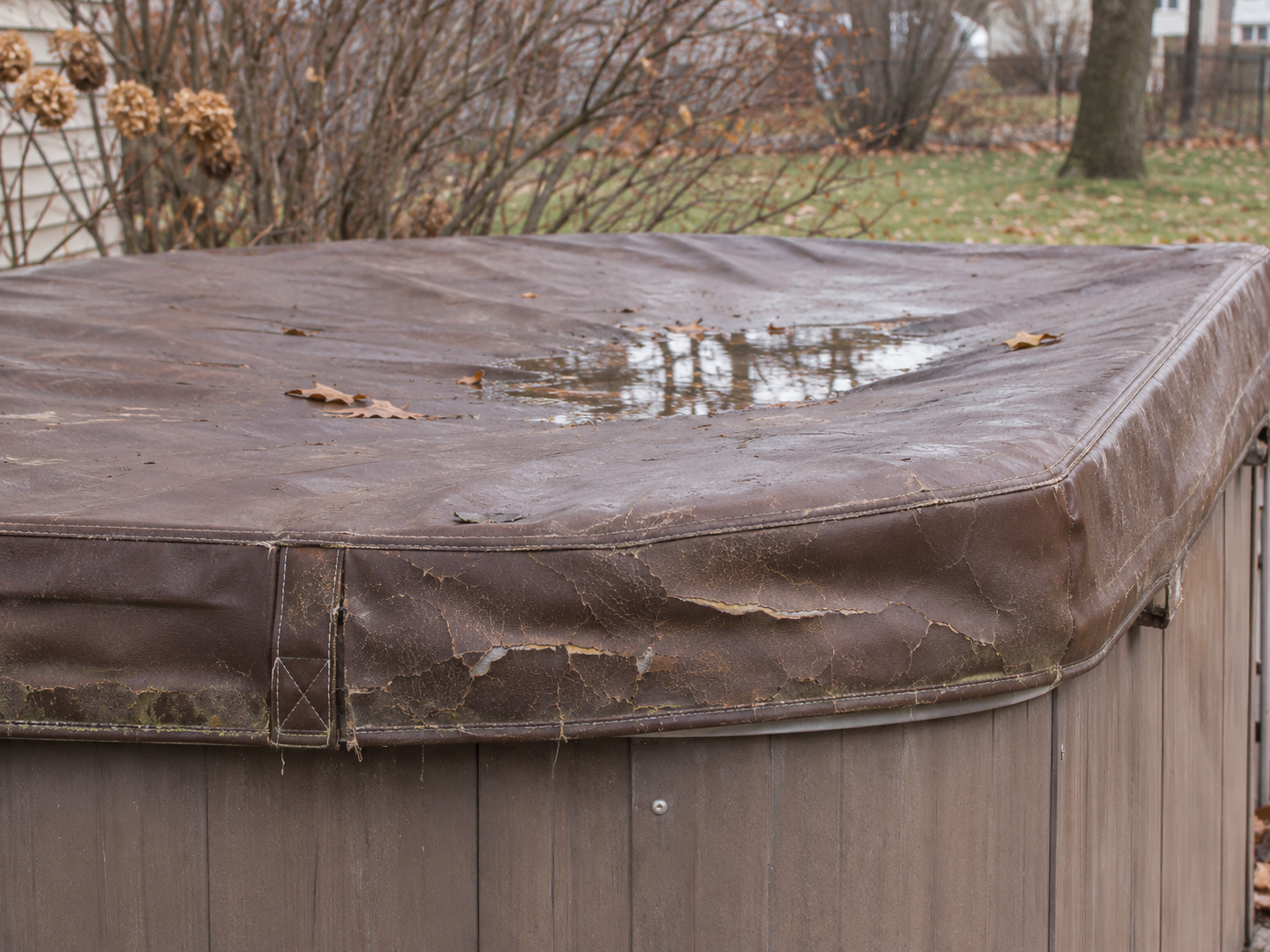
Accurate measurements are essential for hot tub cover replacement because similar-looking spas can have different corners, rims, and folding arrangements. Start with the spa’s make, model, serial number, and the replacement supplier’s measuring sheet.
Measure the spa itself and compare those dimensions with the supplier’s requirements. An old cover may have stretched, shrunk, or distorted, so it should not be your only reference.
- Record the overall shape and dimensions. Measure length and width across the top, from the outer edges specified on the supplier’s diagram; measure diameter for a circular spa. Do not measure just the water opening or assume a nominal model size is exact.
- Check every rounded corner. Use the supplier’s radius template or carpenter’s-square method, measuring from the projected square corner to where the curved edge becomes straight. Radius is not the curved distance around the corner; confirm any uncertain result before ordering.
- Measure the skirt drop. Record the flap length needed below the cover edge to suit the rim and cabinet. A skirt should hang correctly without bunching up and interfering with seating.
- Confirm the fold direction. Mark which way the cover opens and where the folded halves will rest. Include nearby walls, fences, and any existing cover lifter.
- Document straps and special details. Record fastening positions, unusual cutouts, raised controls, or other obstructions. Photograph the spa from above and from each accessible side, then submit everything for confirmation.
Before approving hot tub cover replacement, review the final dimensions and orientation in writing. Do not add extra inches or round measurements unless the supplier specifically instructs you to do so.
What to Look for in a Replacement Cover
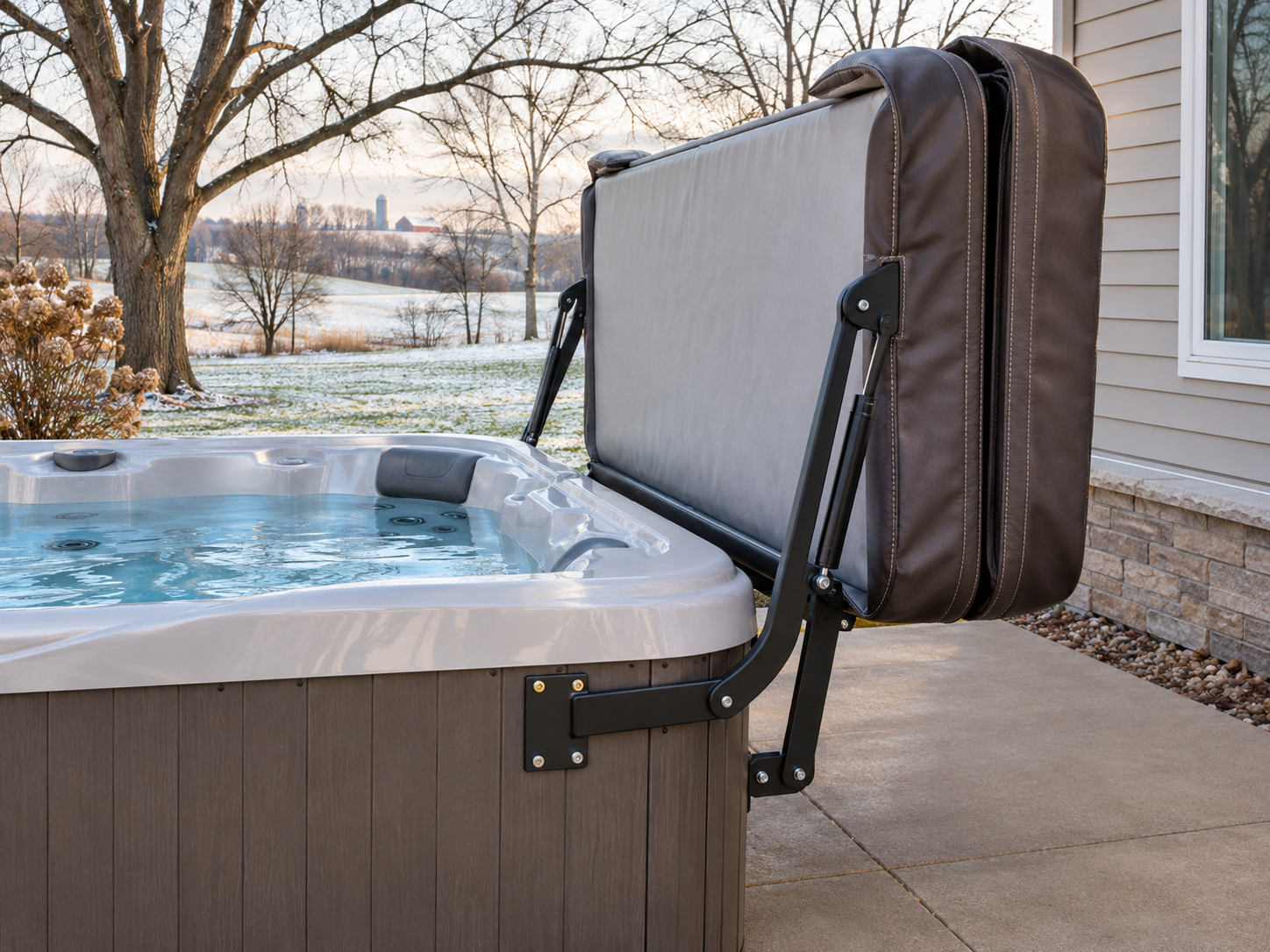
Compare hot tub cover replacement options by their full construction and fit, rather than choosing on color or thickness alone. Ask for specifications you can match to your spa.
Foam density and taper
Ask about both foam density and thickness, since they describe different properties. Density affects strength and insulation characteristics, while thickness and overall design also influence performance.
For hot tub cover replacement, a tapered core is thicker at the center and thinner toward the edges to encourage runoff. For hot tub cover replacement in Iowa, discuss snow exposure and the manufacturer’s load limitations; a thicker cover is not permission to let snow accumulate.
Vapor barrier and center seal
The vapor barrier protects the foam from moisture inside the spa environment. Ask how it is sealed, especially around seams and reinforcement, because an attractive exterior does not reveal the quality of this protection.
Inspect how the two halves meet at the fold. A well-designed insulating seal along the hinge helps limit heat loss where the cover bends. Hot Spring Spas
Locking straps and safety labeling
Your hot tub cover replacement should include suitable locking straps and secure attachment hardware for the specific installation. Ask for product labeling and documentation identifying whether the complete cover meets the applicable safety-cover requirements.
The Store ASTM addresses safety-cover performance and cover labeling for pools, spas, and hot tubs. A description such as “heavy-duty” or the presence of locks alone does not establish compliance.
Follow installation instructions and fasten every required strap whenever the spa is unattended. A safety cover adds protection but does not replace adult supervision.
If your backyard includes—or may eventually include—both a spa and a cold plunge, our cold plunge vs hot tub comparison covers ownership considerations, including space for access and cover storage.
Cover lifter compatibility
Include the lifter in your hot tub cover replacement discussion. Confirm its mounting style, opening clearance, and compatibility with the replacement’s thickness, fold, and weight.
Pair hot tub cover replacement with a suitable lifter for easier handling and storage off the patio. If the old cover was waterlogged, have stressed brackets and mounting points checked before fitting the replacement.
How Odyssey Spas Can Help
Odyssey Spas is a family-owned dealer with showrooms in Des Moines and Pella. We service and repair most major hot tub brands, stock common parts, and can help identify and source parts for your model.
Bring your model information, measurements, and photographs when discussing hot tub cover replacement. Odyssey recommends professional service every 3–4 months.
If you are considering a new spa instead of replacing the cover on your current one, our guide to the best time to buy a hot tub in Iowa can help you plan around model availability, backyard preparation, and delivery.