Winterize Hot Tub Systems: An Iowa Owner’s Guide
Should you winterize hot tub plumbing before cold weather, or keep your spa ready for snowy evenings? For Iowa owners, the answer depends on winter use, regular monitoring, and whether someone will be home to look after the water and equipment.
Keeping a spa running can make sense when you use it regularly. Closing a hot tub for winter is worth considering when you will be away for months, but draining the shell alone is not enough: water trapped inside the plumbing also needs attention.
Keep Your Hot Tub Running or Close It?
Before deciding to winterize hot tub equipment, think about your actual winter routine. A working spa needs maintained water chemistry, adequate water level, dependable circulation, and regular checks even when nobody is soaking.
- Keep it running if you enjoy winter soaking and can monitor it consistently.
- Consider shutting it down if you will be away for an extended period without reliable help.
- Arrange professional guidance if you cannot identify how to winterize hot tub equipment for your model.
Compare [INTERNAL LINK: what it costs to keep a hot tub running in winter → https://odysseyspas.com/cost-to-run-hot-tub-winter/] with the work involved in closing and reopening it. Turning the thermostat down does not replace proper winterization, and freeze protection requires working equipment and power.
If you are reconsidering how you use your backyard, our comparison of [INTERNAL LINK: cold plunge vs hot tub → https://odysseyspas.com/cold-plunge-vs-hot-tub/] explains the different experiences. An unheated, unattended hot tub is not a substitute for a purpose-built cold plunge.
When to Winterize Hot Tub Plumbing in Iowa
Plan to winterize hot tub plumbing before the first hard freeze, ideally while daytime and overnight temperatures remain above freezing. Do not treat the first snowfall as your deadline; freezing temperatures can arrive sooner.
To winterize hot tub plumbing thoroughly, choose a mild day with enough time to finish the entire shutdown. Use the National Weather Service to check conditions for your specific location.
Schedule help early if you need a technician to winterize hot tub components you cannot access safely. If your spa has already frozen, see [INTERNAL LINK: what to do if your hot tub freezes → https://odysseyspas.com/frozen-hot-tub/].
Prepare to Winterize Hot Tub Components Safely
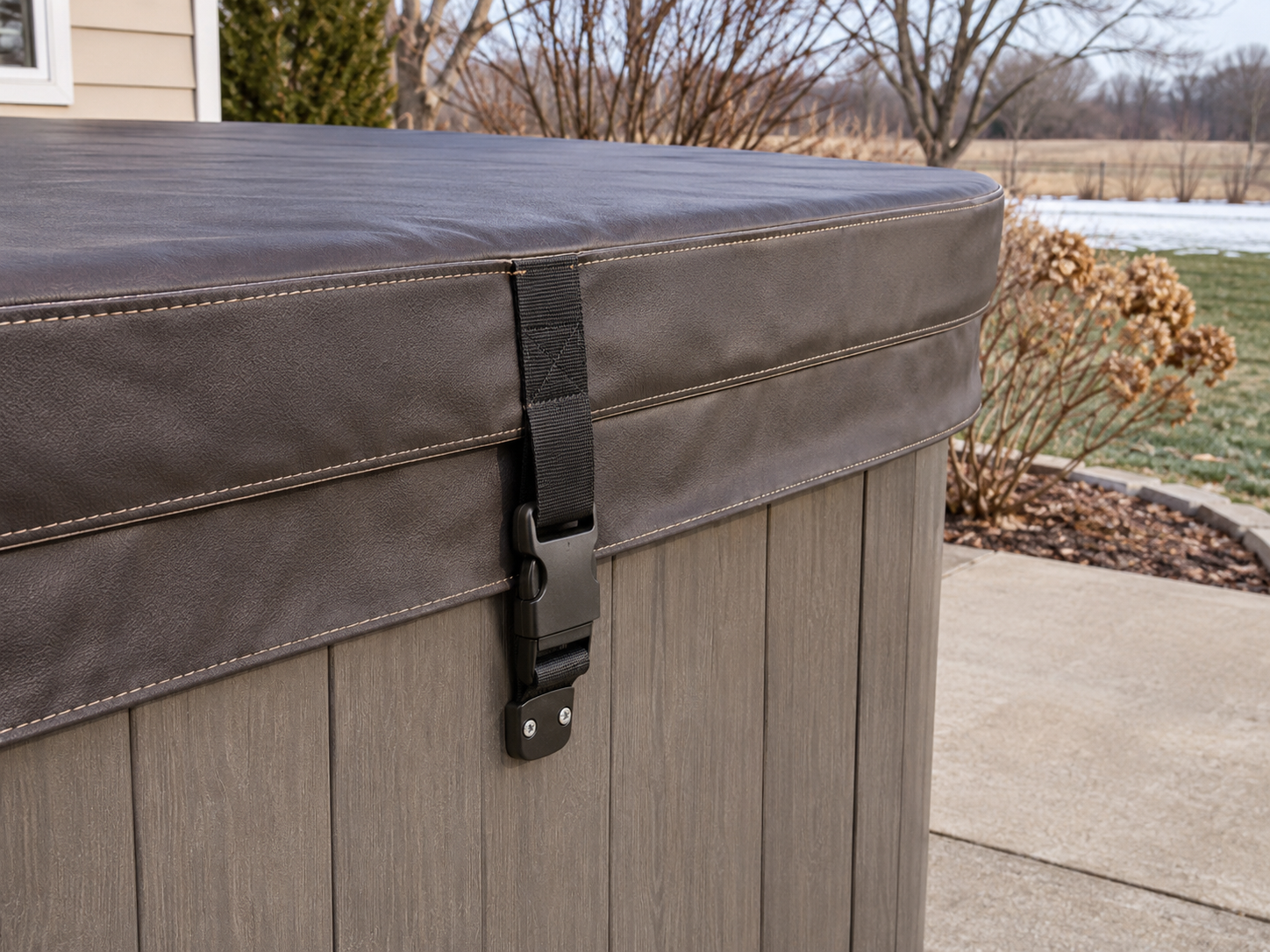
Find the owner’s manual for your exact model before gathering supplies. Plumbing layouts vary, so a general winterize hot tub checklist cannot specify every drain, valve position, or antifreeze entry point.
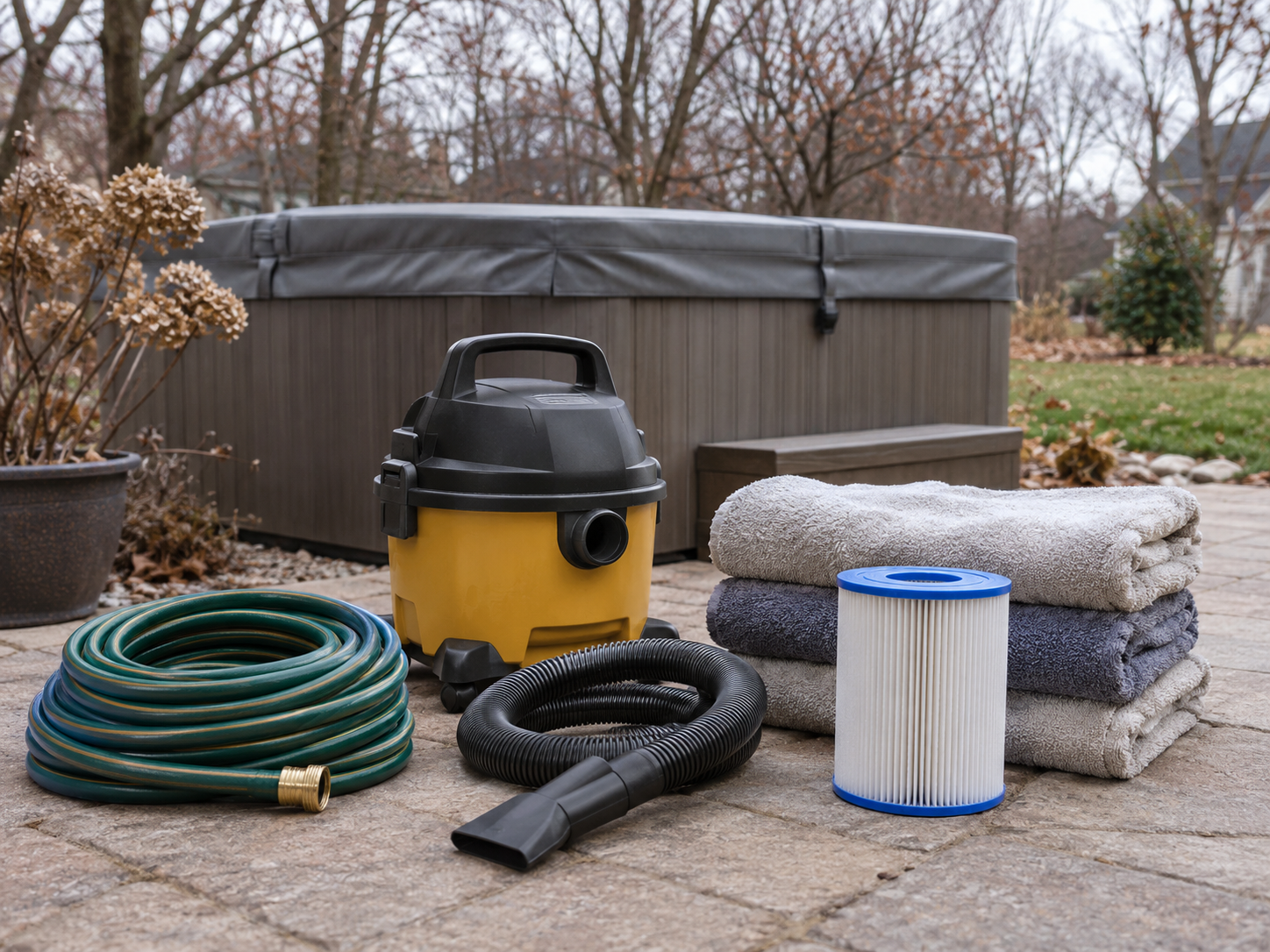
Gather a garden hose, towels, a suitable wet/dry vacuum, filter cleaner, and manufacturer-approved hot-tub-safe propylene glycol antifreeze if your manual permits it. Before you winterize hot tub lines, confirm the product’s temperature protection and application instructions.
What homeowners can handle
Routine preparation generally includes testing the water, operating an accessible breaker with dry hands, using the designated drain, handling filters, and securing the cover. Follow the manual and stop if an instruction requires unfamiliar equipment access.
What belongs with a technician
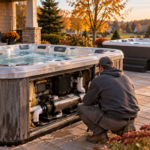
Have a qualified technician winterize hot tub pumps, heater assemblies, and inaccessible plumbing. Electrical testing, wiring, and opening electrical enclosures belong with qualified professionals.
Some models require specialized draining procedures, including moving or tipping the spa; never attempt that yourself. Agree on the full shutdown sequence before draining so the equipment is not left partially winterized overnight. dreammakerspas.com
Seven Steps to Winterize Hot Tub Systems
Use these steps as a planning guide alongside your model’s manual. To winterize hot tub systems completely, both the shell and hidden water-holding components must be addressed.
- Let the sanitizer level drop. Stop adding sanitizer ahead of the planned drain and test the water until it meets local discharge requirements; do not rely on a fixed number of days. Keep normal circulation and heating running during this preparation, avoid bathing once sanitizer falls below the safe range, and keep the cover secured between checks.
- Turn off power at the breaker. Before draining, switch off the breaker supplying the spa and prevent anyone from switching it back on. The control-panel button alone is not electrical isolation; if the correct breaker is unclear, have a qualified professional identify it.
- Drain through the designated outlet. Attach a hose and direct water to an approved discharge location, away from foundations and places where it could create ice. Follow our [INTERNAL LINK: step-by-step draining guide → https://odysseyspas.com/how-to-drain-a-hot-tub/] and remove remaining shell water with a wet/dry vacuum or towels; never run the spa’s pump dry.
- Clear the lines and drain the equipment. Remove the filter first if your manual requires access through its compartment, then use the specified wet/dry-vacuum blowing or suction procedure at the designated openings. Work through every applicable jet circuit, filter line, and water feature; avoid high-pressure compressed air, and have a technician drain pump housings, heater components, and trapped low points.
- Remove, clean, and store the filters. If not already removed, take out each cartridge and clean it with a suitable filter cleaner according to its label. Rinse thoroughly, let it dry completely, and store it somewhere clean and dry; remove residual water from the empty filter compartment.
- Add approved propylene glycol antifreeze where specified. When permitted by your spa manufacturer, add hot-tub-safe propylene glycol antifreeze to the designated plumbing openings using the specified amount and dilution. Never use automotive ethylene glycol, assume all RV products are suitable, or run the spa pump to distribute antifreeze; it supplements proper draining rather than replacing it.
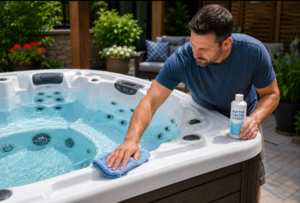
- Dry the shell and secure the cover. Wipe out remaining puddles, have the technician confirm the correct winter storage positions for drains and fittings, and refit access panels. Seat the cover evenly and fasten its working straps and locks; leave the spa’s power off throughout winter storage.
Do not assume an empty-looking shell means you have finished. When you winterize hot tub plumbing, concealed pockets of water are the reason a model-specific procedure matters. dreammakerspas.com
Check the Cover and Plan for Spring
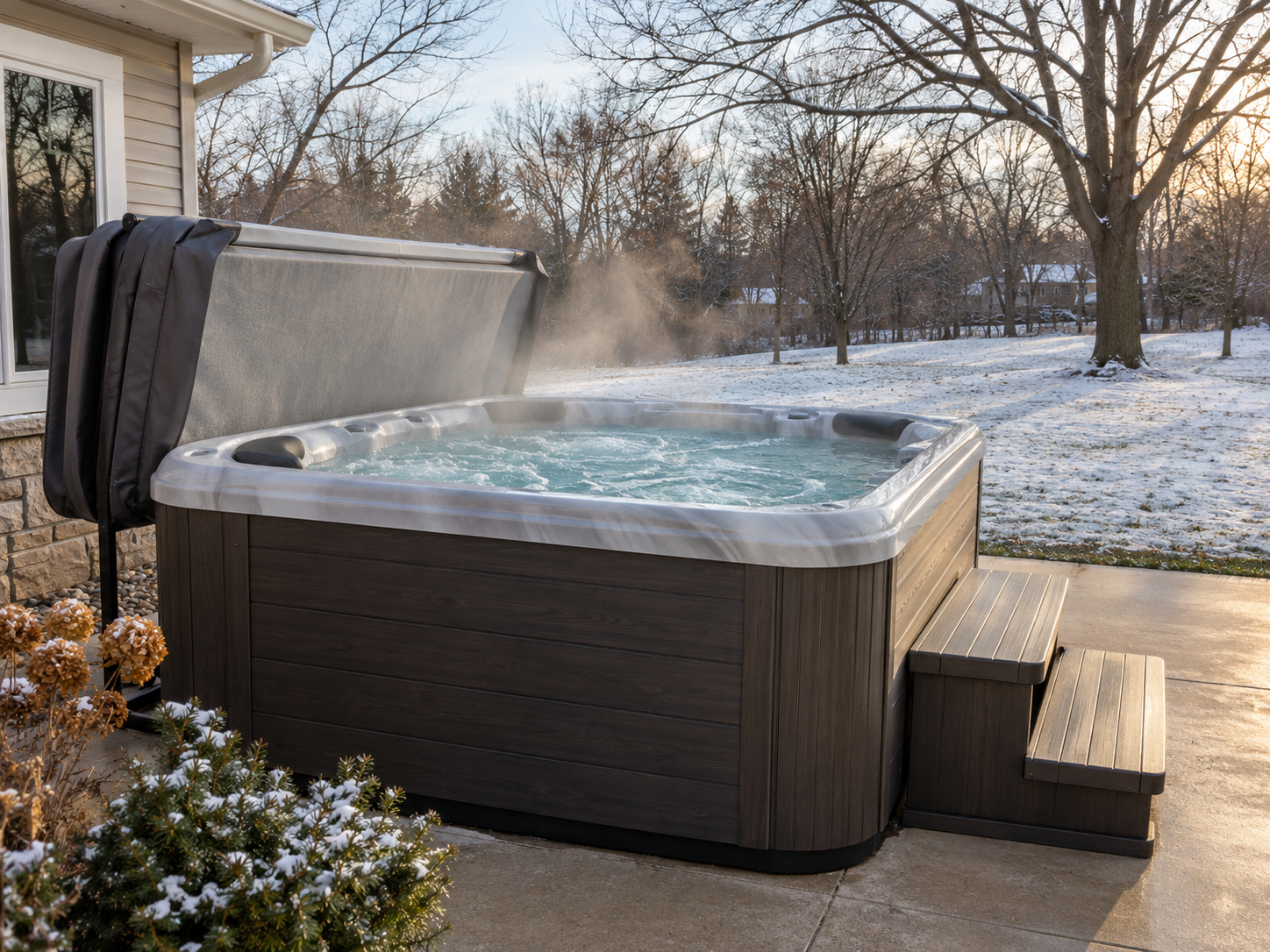
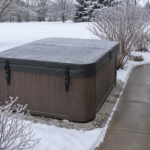
After you winterize hot tub equipment, inspect the closed spa periodically and after storms. Check for shifted straps, rain entering through damaged seams, and snow buildup; remove snow gently using the cover manufacturer’s instructions.
A sagging, waterlogged, or poorly fitting cover deserves attention before winter storage. Learn [INTERNAL LINK: when to replace a worn cover → https://odysseyspas.com/hot-tub-cover-replacement/] rather than relying on extra weight to hold a failing cover down.
When you winterize hot tub plumbing, keep a record of antifreeze used and any plugs or fittings left disconnected. Before spring startup, follow the manufacturer’s flushing procedure and have equipment reassembled correctly; restore power only after the spa is properly filled and ready.
Why Choose Odyssey Spas for Winter Preparation?
Odyssey Spas is a family-owned dealer with showrooms in Des Moines and Pella. We service and repair most major hot tub brands, stock common parts, and can help source parts for your model.
Before you winterize hot tub equipment, ask about [INTERNAL LINK: professional hot tub service → https://odysseyspas.com/hot-tub-service-maintenance-guide/] and your model’s requirements. Odyssey recommends professional service every 3–4 months and offers free water testing for hot tubs and pools.
Considering a replacement instead of another season with your current spa? Odyssey sells Aspen Spas and DreamMaker Spas, and our guide to [INTERNAL LINK: when to buy a new hot tub → https://odysseyspas.com/best-time-to-buy-a-hot-tub/] can help you plan.