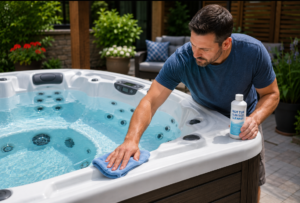
Searching for hot tub repair near me usually means something isn't working the way it should. Maybe your hot tub stopped heating overnight, the jets have lost pressure, or you've noticed water collecting around the cabinet. Whatever the problem, finding the right repair company can make the difference between a straightforward repair and an expensive, recurring issue.
For homeowners in Des Moines, Pella, and surrounding central Iowa communities, choosing a qualified local hot tub technician comes with a few extra considerations. Iowa's freezing winters, changing temperatures, and varying water conditions can put additional stress on spa equipment.
The good news is that many common hot tub problems are repairable. Knowing what to look for in a service provider, which questions to ask, and what to expect during a repair visit will help you make a confident decision.
Why Choosing a Local Hot Tub Repair Company Matters
When your spa breaks down, you have several options. You can contact the manufacturer, search for a national service provider, attempt a repair yourself, or work with a local hot tub service company.
For many homeowners, a local provider offers practical advantages, particularly when dealing with an established hot tub that requires ongoing maintenance.
1. Familiarity With Iowa's Climate
Hot tubs in central Iowa operate under challenging seasonal conditions.
During winter, outdoor temperatures can remain below freezing for extended periods. A functioning spa relies on its heater, circulation system, insulation, and control equipment to maintain water temperature and protect internal plumbing.
When a heating element fails or circulation stops, water trapped inside pumps, manifolds, and plumbing lines may eventually freeze.
A technician familiar with local winter conditions should know how to assess these risks before attempting a repair.
Seasonal experience also matters in spring, when repeated freezing and thawing can reveal leaks or plumbing damage that developed during colder weather.
2. Knowledge of Common Spa Systems
Hot tubs contain several interconnected mechanical and electrical components.
A heating problem, for example, doesn't always mean the heater itself has failed. The actual cause could be a dirty filter, restricted water flow, defective temperature sensor, malfunctioning circulation pump, or control system fault.
A capable hot tub technician should understand how these systems interact rather than simply replacing the first component that appears defective.
This approach helps avoid unnecessary parts purchases and repeated service visits.
3. Access to Replacement Parts
One of the first questions to ask a repair company is whether it can source parts for your particular hot tub.
Common replacement components include:
- Heating elements and complete heater assemblies
- Circulation pumps and jet pumps
- Temperature and high-limit sensors
- Pressure switches and flow switches
- Pump seals and unions
- Jets and replacement fittings
- Control panels and electronic circuit boards
- Plumbing fittings, gaskets, and O-rings
A company that maintains common parts in stock may be able to complete certain repairs without waiting for a special order.
Odyssey Spas keeps common parts in stock and can source additional components for the major hot tub brands it services.
You can learn more about the available services on the Odyssey Spas hot tub repair page.
Hot Tub Repair Near Me in Des Moines: What to Look For
Not every company offering spa maintenance provides the same level of technical service.
Some businesses focus primarily on cleaning and chemical balancing. Others handle mechanical repairs, electrical troubleshooting, plumbing problems, and component replacement.
Before scheduling an appointment, make sure the company performs the type of work your spa actually needs.
Compare Repair Capabilities Before Calling
| What to look for | Why it matters | What to ask |
|---|---|---|
| Mechanical repair experience | Pumps, jets, and moving components require accurate diagnosis. | Do you repair jet pumps and circulation systems? |
| Electrical troubleshooting | Heaters and controllers may have electrical faults. | Can you diagnose GFCI trips and control system errors? |
| Plumbing repairs | Leaks can originate in concealed fittings or manifolds. | Do you handle internal hot tub plumbing leaks? |
| Brand compatibility | Parts and control systems vary by manufacturer. | Do you service my hot tub's brand and model? |
| Parts sourcing | Uncommon components may need to be ordered. | Do you stock common parts or source replacements? |
| Winter service knowledge | Freezing temperatures increase the consequences of equipment failure. | How do you handle a hot tub that stops heating in winter? |
| Clear estimates | Diagnostic findings should guide the repair decision. | How are diagnostic charges and repair estimates handled? |
Look for Diagnosis, Not Guesswork
A good service provider should be willing to explain the likely problem and the process used to confirm it.
For instance, when a hot tub displays a flow error, a technician may need to inspect the filter, check water movement, evaluate the circulation pump, and test the relevant sensors.
Replacing the flow switch without checking actual water circulation could leave the underlying problem unresolved.
The same principle applies to heating, leaking, and electrical problems.
A proper diagnosis should come before recommending expensive replacement components.
Make Sure the Company Services Your Brand
Hot tubs can use different control platforms, heater configurations, pump connections, and proprietary components.
Even when two spas have similar symptoms, the appropriate repair procedure may differ.
Before booking service, provide the manufacturer, model number, and approximate age of your hot tub.
If you're unsure where to find that information, ask the company what details it needs. Many models have identification labels on the exterior cabinet or inside the equipment compartment.
Odyssey Spas provides repair and service for most major hot tub brands, so homeowners do not necessarily need to own a brand sold by the company to inquire about service.
Seven Questions to Ask Before Scheduling Hot Tub Repair
A short phone conversation can tell you a great deal about how a repair company operates.
Before booking hot tub repair in Des Moines or the surrounding area, ask these questions.
1. Do you service my hot tub's manufacturer and model?
Some control boards, sensors, and plumbing fittings are model-specific. Confirm compatibility before scheduling a visit.
2. What does the initial diagnostic visit include?
Ask whether the technician will evaluate the suspected system, identify the likely failure, and explain recommended repairs.
Find out how diagnostic charges are handled.
3. Will I receive an estimate before major repairs begin?
The final cost may depend on the component involved, how accessible it is, and whether additional damage is discovered.
Ask how the company communicates pricing and obtains approval.
4. Do you have access to replacement parts?
A common pump seal may be readily available, while an older electronic control board could require special sourcing.
Ask whether the company expects to order parts after diagnosis.
5. Can you handle both mechanical and electrical problems?
Many spa symptoms involve multiple systems.
A heater error might actually originate with a circulation issue, while a pump that will not start could have a failed capacitor, electrical connection, or motor.
6. What should I do while waiting for service?
This question is especially important during freezing weather.
Ask whether the spa should remain powered, whether the cover should stay closed, and whether any immediate precautions are necessary.
Follow the technician's instructions for your specific situation. A spa with an electrical hazard or active leak may require different handling from one with a minor heating fault.
7. What happens if the repair does not solve the problem?
Ask how the company handles follow-up diagnostics, additional findings, and workmanship concerns.
Do not assume that a particular warranty or follow-up policy applies without confirming it.
A company should be able to discuss its service process clearly before work begins.
What Happens During a Professional Hot Tub Repair Visit?
If you've never scheduled a hot tub technician before, knowing the general process can make the experience easier.
Individual companies may use different procedures, but a typical diagnostic visit follows several steps.
Step 1: Review the Symptoms
The technician will usually begin by discussing what you've noticed.
Helpful details include:
- When the problem started
- Whether the hot tub stopped suddenly or gradually
- Any error codes on the control panel
- Whether the water is still heating
- Unusual noises, odors, or leaks
- Recent power outages or breaker trips
- Maintenance or repairs performed recently
For example, a spa that stopped heating immediately after a power outage may require a different diagnostic approach from one that slowly lost heating performance over several weeks.
Specific information helps narrow down the possible causes.
Step 2: Perform an Initial Inspection
Depending on the symptoms, a technician may inspect the equipment compartment, plumbing connections, pump assemblies, heater housing, and control components.
They may also check the water level, filter condition, and visible signs of leaking or overheating.
Water around the base of a spa isn't always evidence of a major plumbing failure. It could come from a loose pump union, deteriorated gasket, damaged seal, or another relatively localized issue.
However, water inside the electrical compartment requires special attention because of the potential shock hazard.
Step 3: Diagnose the Fault
Professional troubleshooting involves confirming which component or system is responsible.
For heating problems, this might involve evaluating circulation, heater operation, and temperature sensing.
For jet problems, the technician may inspect pump operation, valve settings, and water flow.
For electrical problems, qualified personnel may test components and circuits using appropriate instruments and safety procedures.
Homeowners should never attempt live-voltage testing inside a hot tub's electrical compartment. Spas combine electricity and water, and even a small wiring mistake can create a serious hazard.
For more guidance on recognizing common failures, read our hot tub repair troubleshooting guide.
Step 4: Explain the Recommended Repair
After identifying the likely problem, the technician should explain the findings and the proposed solution.
A good explanation covers what failed, why the recommended repair is appropriate, and whether other related components need attention.
Some repairs involve a single replacement component. Others require more extensive work because the problem affects several connected systems.
Step 5: Complete the Repair and Check Operation
Once the necessary repair is approved and completed, the repaired system should be checked for proper operation.
Depending on the work performed, this may include verifying water circulation, checking repaired plumbing connections, observing pump operation, or confirming that the heater and controls operate correctly.
Afterward, ask whether any follow-up water care or maintenance is recommended.
Common Hot Tub Problems Local Technicians Can Diagnose
The symptoms you notice are not always the same as the underlying problem.
Here are several issues that frequently require professional attention.
Hot Tub Not Heating Properly
A hot tub that stays lukewarm, heats slowly, or displays a heater error may have a faulty heating element.
However, restricted circulation can also prevent heating.
Potential causes include:
- Dirty or clogged filters
- Low water level
- Circulation pump problems
- Faulty temperature sensors
- Failed heater components
- Control system malfunctions
Start by checking the displayed temperature, water level, and any error messages. If the problem continues, arrange professional diagnosis instead of repeatedly resetting the system.
Jets Not Working or Producing Weak Pressure
Weak jets can result from several conditions.
Air controls may be closed, water levels may be low, or the filter may be restricting flow.
In other cases, the problem involves the jet pump, pump motor, diverter valve, or internal plumbing.
If a pump hums without moving water, turn the equipment off and seek service. Continuing to operate a stalled motor can cause further damage.
Water Leaking From the Cabinet
Hot tub leaks range from minor fitting problems to damaged plumbing lines.
A loose union or failing O-ring can create a steady drip. Cracked PVC fittings, damaged manifolds, and pump seals may allow more significant water loss.
Leaks that develop after freezing weather deserve particular attention.
Avoid using the spa if water is reaching electrical components, and do not attempt to seal pressurized plumbing with household adhesive.
GFCI Breaker Keeps Tripping
A ground-fault circuit interrupter, or GFCI, helps protect users from electrical shock by interrupting power when it detects a ground fault.
Repeated trips may indicate a problem involving the heater, pump motor, wiring, moisture intrusion, or another electrical component.
Do not repeatedly reset a tripping GFCI or bypass its protection.
Leave the equipment off and have the problem evaluated by a qualified professional.
Control Panel Displays Error Codes
Modern hot tubs rely on electronic controls to monitor heating, circulation, temperature, and other operating conditions.
Error messages may indicate restricted flow, sensor faults, overheating, or communication problems.
Record the exact error code and your spa's model before calling.
Avoid replacing a control panel simply because it displays an error. The panel may be reporting a problem elsewhere in the system.
Why Iowa Winters Make Hot Tub Repair More Urgent
A heating or circulation problem that seems inconvenient in September can become serious during January in Des Moines.
When temperatures remain below freezing, water inside exposed or poorly protected plumbing can freeze and expand.
That expansion may crack fittings, damage pump housings, or split pipes.
How Freeze Damage Happens
A typical hot tub contains several places where water can remain trapped:
- Pump wet ends and volutes
- Heater housings
- Flexible plumbing lines
- PVC manifolds and fittings
- Jet connections
- Low points in the circulation system
Even when the main spa shell appears to have enough water or retains some warmth, individual equipment components can be vulnerable.
Repeated freezing and thawing may also turn a small plumbing weakness into a larger leak.
What to Do if Your Hot Tub Stops Heating in Freezing Weather
First, check the control panel for temperature readings or error messages without opening energized equipment compartments.
If the spa is safely operating and maintaining water circulation, keep the insulated cover closed to reduce heat loss.
If you notice a burning smell, exposed wiring, electrical arcing, or water near electrical components, do not continue operating the spa. Keep clear and have power safely isolated.
If the GFCI has tripped, do not repeatedly reset it.
Contact a service professional promptly and explain the outdoor temperature, current water temperature, and whether water appears to be circulating.
Do not assume that draining the shell will protect the plumbing. Water can remain inside pumps and lines even after the visible spa water has been removed.
Should You Drain a Broken Hot Tub During Winter?
Not without understanding the winterization requirements.
Proper winterization involves removing water from equipment and plumbing where freezing could cause damage. Simply opening the drain may leave water trapped in critical components.
If the spa needs to be emptied for maintenance during safe weather conditions, our guide to draining a hot tub explains the general process.
A nonworking spa facing freezing temperatures is a different situation. Seek model-specific guidance before draining or attempting winterization.
If you're considering a new spa designed for year-round use, our article on the best hot tubs for cold climates explains features worth comparing.
Local Hot Tub Repair vs. National Service Providers
A national repair network and a local hot tub company may both be reasonable options, depending on your situation.
The best choice depends on the repair, your equipment, parts availability, and the service provider's actual capabilities.
| Consideration | Local hot tub company | National service network |
|---|---|---|
| Local climate familiarity | May have direct experience with Iowa winters and seasonal issues | Experience varies by assigned technician |
| Direct communication | May offer direct contact with the servicing business | May route requests through a central scheduling system |
| Brand coverage | Depends on the company's experience and parts access | Depends on network technicians and supported brands |
| Replacement parts | May stock commonly used components locally | Availability depends on the network and assigned provider |
| Ongoing maintenance | May offer a continuing relationship with the same service business | Continuity depends on the network's structure |
| Manufacturer-specific work | Must be verified before scheduling | May be useful for manufacturer-directed repairs |
National service providers can be a good choice when the manufacturer requires a particular authorized repair channel.
Local providers may be especially useful when you want a continuing relationship for both repairs and routine service.
For central Iowa homeowners, evaluating actual repair capabilities matters more than choosing solely by company size.
How to Prepare Before Your Hot Tub Service Appointment
A little preparation can help the technician identify the problem efficiently.
Make the Equipment Accessible
Remove stored items, patio furniture, or other obstacles blocking the equipment access panel.
Do not remove electrical covers or dismantle equipment yourself.
If the hot tub is on a deck or enclosed patio, mention any access restrictions when scheduling service.
Record the Problem
Take a photo of error codes, visible leaks, or unusual control panel readings.
Write down when the problem occurs.
Does the breaker trip as soon as the spa starts? Does the pump make noise only when the jets are activated? Does the water temperature drop overnight?
These details can help distinguish intermittent faults from complete component failures.
Gather Model Information
Keep the brand, model number, and any available owner's manual accessible.
If the spa has been repaired previously, having a record of the replaced parts may also be useful.
Avoid Unnecessary Adjustments
Don't repeatedly reset breakers, change wiring, bypass sensors, or run a pump that appears to be overheating.
Avoid adding chemicals in an attempt to solve a mechanical problem.
If the spa is losing water, ask the service provider whether the water level should be maintained until the appointment, particularly during freezing conditions.
When to Call a Professional Hot Tub Technician
Some hot tub maintenance tasks are appropriate for homeowners. Others require professional diagnosis because they involve electrical equipment, pressurized plumbing, or components that can be damaged by incorrect handling.
Use this checklist to decide what to do next.
| Symptom | Safe homeowner action | When to call a professional |
|---|---|---|
| Water level slightly low | Check against the recommended fill level | If water loss continues or a leak is visible |
| Dirty filter | Clean according to the manufacturer's instructions | If flow errors continue after cleaning |
| Water not heating | Check temperature settings and displayed errors | If temperature does not recover or heating stops |
| Weak jets | Check water level and accessible air controls | If pump operation or pressure remains abnormal |
| GFCI trips | Leave the spa off | Call for electrical diagnosis; do not repeatedly reset |
| Loud grinding or humming | Turn off the affected equipment safely | Arrange pump or motor inspection |
| Water near electrical equipment | Stay clear and avoid touching wet equipment | Seek professional help before further use |
| Frozen or cracked plumbing | Avoid forcing operation or applying direct heat | Arrange professional assessment |
| Unresponsive control panel | Record any visible symptoms | If the panel remains unresponsive |
The biggest warning signs are repeated electrical faults, significant leaks, unusual motor noises, and failure to heat during freezing weather.
These are situations where delaying service or attempting the wrong repair can lead to additional damage.
If you are unsure whether a problem is minor or serious, describe the symptoms to a repair company before trying to disassemble anything.
Preventing Future Repairs With Routine Hot Tub Service
Not every repair is preventable, but routine care can reduce the risk of avoidable equipment problems.
Odyssey Spas recommends professional hot tub service every three to four months.
This schedule provides an opportunity to review equipment condition, water care, filtration, and developing maintenance concerns throughout the year.
Our hot tub service and maintenance guide explains what routine visits may involve and how to organize seasonal care.
Protect Your Filtration System
A clogged filter can restrict circulation and contribute to flow-related heating problems.
Clean filters according to your hot tub manufacturer's recommendations and replace them when necessary.
Inspect filter media for damage or excessive buildup.
Keep Water Chemistry Balanced
Improper water chemistry can contribute to scale deposits, corrosion, cloudy water, and premature wear on certain components.
The mineral content of the fill water also matters. Hard water can promote scale formation on heating surfaces and inside plumbing.
Test your water regularly and use compatible products according to the manufacturer's directions.
Never mix concentrated spa chemicals together. Add each product separately as directed, store chemicals in their original containers, and keep them away from children and moisture.
For guidance on healthy hot tub use, review the CDC's hot tub health and safety guidance.
You can also explore hot tub water care and cleaning advice for practical maintenance information.
Plan Ahead for Winter
Before central Iowa temperatures consistently fall below freezing, check that your spa is heating normally, the cover closes securely, and water circulates as expected.
An aging or damaged cover can increase heat loss, while poor circulation may contribute to heating faults.
Arrange an inspection if you notice unusual equipment behavior before cold weather arrives.
If your hot tub has suffered repeated major failures, comparing repair costs with replacement options may also be reasonable. Our spa repair versus replacement guide walks through that decision.
Frequently Asked Questions About Hot Tub Repair Near Me
How much does it cost to repair a hot tub in Des Moines?
Hot tub repair costs depend on the failed component, diagnostic work, labor, and parts availability. A simple gasket repair typically costs less than replacing a pump or electronic control system. Prices also vary with equipment accessibility and spa model. Contact Odyssey Spas for a quote based on your specific problem.
Can you repair a hot tub that is not heating?
Yes, many hot tub heating problems are repairable. Common causes include a failed heating element, poor water circulation, clogged filters, faulty sensors, or control system problems. A technician should identify the actual cause before recommending replacement parts. If the spa stops heating during freezing weather, seek service promptly.
How do I find a reliable hot tub repair company near me?
Look for a company that services your hot tub brand, handles mechanical and electrical troubleshooting, and can explain its diagnostic process. Ask about parts availability, estimates, and follow-up procedures. In Iowa, experience with winter heating failures and freeze-related plumbing damage is another useful consideration when comparing service providers.
Is it worth repairing an older hot tub?
Many older hot tubs are worth repairing when the shell is sound, replacement parts remain available, and the problem involves a limited number of components. Multiple major failures, widespread leaks, or obsolete electronics may make replacement more practical. Compare the complete repair estimate with the cost and expected condition of a replacement spa.
What should I do if my hot tub stops working during winter?
Keep the insulated cover closed if the spa is safe to leave covered, and check the displayed temperature and error codes without opening electrical compartments. Don't repeatedly reset a tripping breaker or drain the spa without proper winterization guidance. Contact a repair professional promptly because trapped water may freeze inside pumps and plumbing.
How often should a hot tub be professionally serviced?
Odyssey Spas recommends professional service every three to four months. Routine visits can help identify circulation problems, worn components, filter concerns, and other maintenance needs before they become more serious. Homeowners should continue regular water testing, filter cleaning, and visual checks between visits according to their spa manufacturer's instructions.
Find Local Hot Tub Repair in Des Moines and Central Iowa
If you're searching for hot tub repair near me, choose a service company that understands your equipment, can diagnose the problem properly, and communicates clearly about recommended repairs.
For homeowners in Des Moines, Pella, and surrounding central Iowa communities, local experience is especially valuable when dealing with winter heating failures, plumbing leaks, and ongoing spa maintenance.
Odyssey Spas provides hot tub repair and routine service for most major brands, including repairs involving heaters, pumps, jets, plumbing, and control systems.
To discuss your hot tub problem or request service, contact:
Odyssey Spas
Phone: 641-628-8292
Email: service@odysseyspas.com